TL;DR
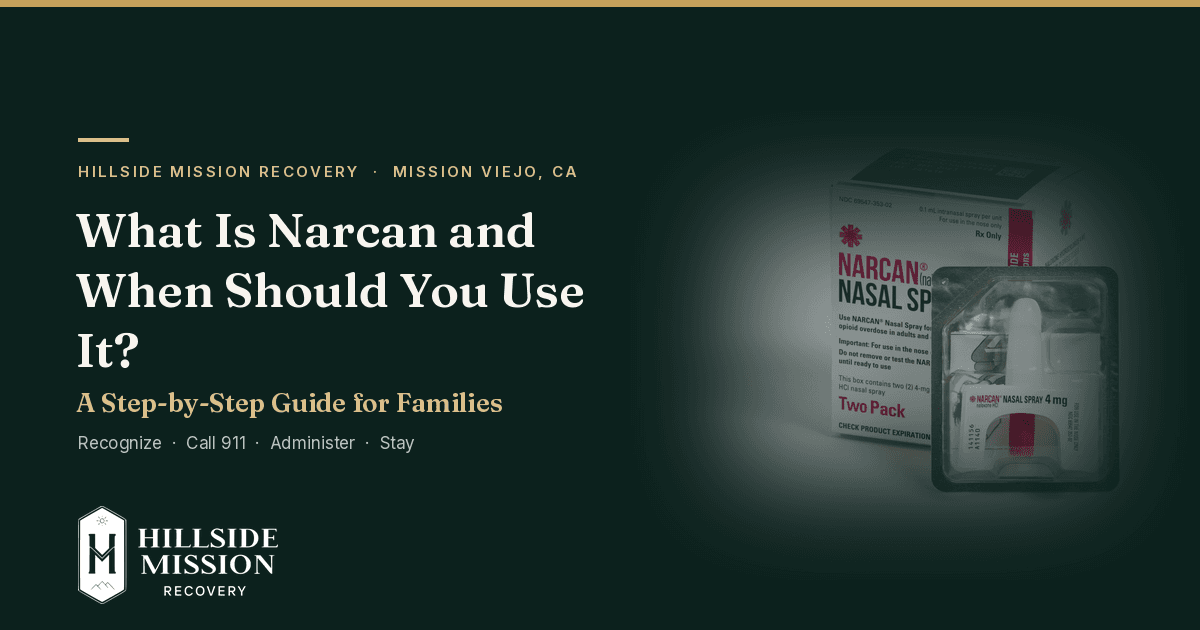
What is Narcan? It's the brand name for naloxone, a medication that can reverse an opioid overdose within minutes.
Narcan works by knocking opioids off receptors in the brain, but it wears off in 30 to 90 minutes, so calling 911 is never optional.
Signs of an opioid overdose include slow or stopped breathing, blue-tinged lips, and a person you cannot wake up.
Yes, Narcan for opioid overdose does expire, usually after about 2 to 3 years, so check the box date regularly.
Narcan is safe to give even if you're wrong about the cause, and it won't hurt someone who isn't overdosing on opioids.
Table of Contents
Introduction
If someone you love uses opioids, whether that's prescription pain pills, heroin, or anything that might be cut with fentanyl, you've probably wondered what you'd actually do in the moment things went wrong. That question deserves a real answer, not vague reassurance. What is Narcan, and could you use it correctly if you had to, tonight, with shaking hands and no time to look up instructions?
This guide covers what Narcan is, how does Narcan work once it's in someone's system, how to recognize an overdose before it's too late, and exactly what to do step by step. We'll also cover where to get it, whether Narcan for opioid overdose expires, and what comes after the emergency ends. At Hillside Mission Recovery, we talk with families every week who wish they'd known this information sooner. We'd rather you have it now.
What is Narcan? Understanding this life-saving medication
Narcan is the brand name for naloxone, a medication that reverses the effects of an opioid overdose. It comes as a nasal spray or an injectable, and it's the tool first responders, hospitals, and now ordinary families reach for when someone has taken too much of an opioid, whether that's heroin, fentanyl, oxycodone, morphine, or another drug in that family.
So, what is Narcan actually doing that makes it different from other treatments you might have heard about, like medications used for long-term opioid use disorder treatment? Naloxone is an emergency reversal drug. It doesn't treat addiction itself and it isn't a substitute for ongoing care. NIDA describes it as a critical tool in reducing opioid overdose deaths, and its research supports naloxone as one part of a broader harm-reduction and treatment strategy[1]. Medications used for ongoing opioid use disorder treatment, like buprenorphine or methadone, work differently: they're taken daily to reduce cravings and withdrawal, not administered in a crisis[1].
Narcan is not a controlled substance and has no potential for misuse, which is part of why it's now sold over the counter in most pharmacies. Understanding what Narcan is matters because fentanyl has changed the risk calculation for nearly every family dealing with substance use, even when the person's drug of choice was never an opioid to begin with.

How does Narcan work in the body?
To understand how does Narcan work, it helps to know what an opioid overdose actually does. Opioids attach to specific receptors in the brain that control breathing. In an overdose, so many opioid molecules attach to those receptors that breathing slows down and can stop altogether. That's what kills people: not the drug directly, but the body's failure to keep breathing.
Naloxone works by attaching to those same receptors more strongly than the opioid, then knocking the opioid molecules off. Within 2 to 5 minutes of a dose, breathing often starts to normalize and the person begins to wake up. That's the core of how Narcan works: direct competition at the receptor level, not sedation or stimulation.
There's a catch families need to understand clearly. Naloxone's effects last only 30 to 90 minutes, and many opioids, especially fentanyl, stay active in the body far longer than that. This means a person can seem fine after one dose of Narcan and then slip back into overdose once it wears off. That's the single biggest reason 911 must be called every time, even if the person appears to fully recover.

Narcan vs. medications for ongoing opioid use disorder treatment
Feature | Narcan (naloxone) | Buprenorphine/methadone |
|---|---|---|
Purpose | Reverses overdose in real time | Reduces cravings, prevents withdrawal long-term |
When used | Emergency, minutes matter | Daily, ongoing treatment |
Duration of effect | 30 to 90 minutes | 24 hours or more |
Requires prescription | No, available over the counter | Yes, prescribed by a provider |
If your family is also weighing longer-term options, our medical detox program is where that kind of medication-supported stabilization actually happens under supervision.

Recognizing the signs of an opioid overdose
You don't need medical training to recognize an overdose. You need to know what to look for and be willing to act fast rather than wait and see. NIDA identifies slowed or stopped breathing as the defining, most dangerous sign of opioid overdose[1].
Breathing that is very slow, shallow, or has stopped entirely
Blue or gray tint to the lips, fingertips, or face
A limp body that won't respond to shouting, shaking, or a firm sternum rub
Gurgling or choking sounds (sometimes called the "death rattle")
Pinpoint pupils, smaller than a pinhead
Pale, clammy skin
If you see any combination of these signs and opioids are involved or even suspected, treat it as an overdose. Fentanyl has made this urgency non-negotiable, since it's now found mixed into counterfeit pills and other drugs where users don't expect it. Don't wait for every symptom to appear before acting; slow or stopped breathing alone is enough reason to give Narcan and call for help.

Step-by-step: how to use Narcan for opioid overdose
When you're using Narcan for opioid overdose, speed and calm matter more than perfection. Here's the sequence:
Step 1: Check for responsiveness. Shout their name, shake their shoulders, rub your knuckles hard on their sternum.
Step 2: Call 911 immediately, or have someone else call while you prepare the Narcan. Say "possible opioid overdose."
Step 3: Lay the person on their back and tilt their head back slightly.
Step 4: Peel back the packaging on the nasal spray. Do not test or prime it beforehand; each device is one dose.
Step 5: Insert the nozzle into one nostril until your fingers touch the bottom of their nose, then press the plunger firmly to release the full dose.
Step 6: Turn the person on their side into the recovery position to prevent choking if they vomit.
Step 7: Wait 2 to 3 minutes. If there's no improvement in breathing, give a second dose in the other nostril using a new device.
Step 8: Begin rescue breathing or CPR if you're trained and the person still isn't breathing.
Step 9: Stay with them until emergency medical services arrive, even if they seem alert and want to leave.
This exact process is why Narcan for opioid overdose has become something families are trained to carry and use themselves, not just something reserved for paramedics. ASAM's evidence-based treatment standards recognize naloxone access and family preparedness as part of a person-centered approach to addiction care[2].

Does Narcan expire? Storage and shelf-life tips
Yes. Does Narcan expire is one of the most common questions families ask, and the honest answer is that it does, typically about 2 to 3 years from the manufacture date. The expiration date is printed directly on the box and on each individual device.
An expired dose isn't necessarily useless in a true emergency, since naloxone tends to lose potency slowly rather than becoming harmful. But you shouldn't rely on that. Check your supply every few months and replace it before the date passes.
Store Narcan at room temperature, ideally between 59°F and 77°F
Avoid leaving it in a hot car, glove compartment, or direct sunlight, which can degrade it faster than the printed date suggests
Keep it in its original packaging until the moment you need it
Set a phone reminder tied to the expiration date so it doesn't quietly lapse in a drawer
If you're unsure whether your Narcan has expired or been damaged by heat, don't skip using it in an emergency. Use it anyway and let paramedics know, then replace your supply as soon as possible afterward.

What to do after administering Narcan
Giving Narcan doesn't end the emergency. It starts the next phase. Because naloxone wears off faster than most opioids stay active in the body, the person needs medical monitoring even if they wake up and insist they're fine.
Stay with them and keep them in the recovery position until EMS arrives
Be honest with paramedics about what was taken, how much, and when, if you know
Expect the person to wake up disoriented, possibly agitated, and in withdrawal, since Narcan reverses the high along with the overdose
Go to the emergency room even if they refuse, or insist EMS transport them for observation
Once the crisis has passed, this is the moment to talk seriously about treatment, not to wait for another close call
An overdose that ends in a Narcan reversal is often the clearest signal a family will ever get that it's time to move toward treatment. If your loved one is ready, or even just willing to talk, a residential inpatient program can provide the structure and medical support that outpatient life often can't in that fragile window right after an overdose. If depression, anxiety, or trauma are part of the picture too, our dual diagnosis program treats both at once, since treating only the substance use rarely holds. For a broader look at what those first days of care actually involve, our guide on what to expect in your first 30 days of treatment walks through it honestly.
Where to get Narcan and how to prepare your family
Narcan is available over the counter at most major pharmacies without a prescription, often for $30 to $50 per two-dose box, and many public health departments and community organizations distribute it for free. SAMHSA's treatment locator and national helpline can point you toward local resources, including where naloxone is distributed in your area, and their helpline (1-800-662-HELP) is staffed around the clock[3].
Because naloxone has no potential for misuse and isn't a controlled substance, there's no legal barrier to keeping it in your home the way there is with many prescription medications regulated by the DEA[4]. Fentanyl's presence in the illegal drug supply means the DEA and public health agencies alike now treat wide naloxone access as basic prevention, not an extreme measure.
Buy at least two doses and keep them somewhere accessible, not locked away
Teach every adult in the household, and any teenagers old enough to understand, how to recognize an overdose and use Narcan
Keep a spare set in a car or bag if your loved one spends time outside the home
Talk to your loved one directly about the plan; secrecy doesn't protect anyone in a crisis
If you're also trying to figure out how to support someone once they're out of immediate danger, our piece on supporting a loved one through rehab covers that longer road in more depth. And if detox and treatment feel like the next necessary step, our first-timer's guide to drug rehab in Orange County answers the practical questions most families have before they call.
Frequently Asked Questions
Q: What is Narcan and how is it different from other overdose treatments?
A: Narcan is the brand name for naloxone, a medication that reverses opioid overdose within minutes by blocking opioids from affecting the brain's breathing control centers. Unlike medications used for ongoing opioid use disorder treatment, it's not taken daily and doesn't treat addiction itself; it's strictly an emergency reversal tool[1].
Q: How does Narcan work to reverse an opioid overdose?
A: Naloxone attaches to the same receptors opioids use, displacing them and restoring normal breathing within 2 to 5 minutes. It wears off in 30 to 90 minutes, so a person can slip back into overdose if the opioid is still active in their system, which is why calling 911 is essential every time.
Q: Does Narcan expire, and how should it be stored?
A: Yes, Narcan typically expires 2 to 3 years after manufacture. Store it at room temperature away from heat and direct sunlight, check the printed date every few months, and replace it before it lapses. If it's expired during an emergency, use it anyway rather than not act at all.
Q: Can Narcan be used on someone who isn't overdosing on opioids?
A: Yes, and it's considered safe to give even when you're not certain the cause is opioids. If opioids aren't involved, naloxone won't help, but it also won't hurt them, so responders are trained to give it whenever an overdose is suspected rather than waiting for certainty.
Q: Is it safe to administer Narcan without medical training?
A: Yes. Narcan nasal spray is designed for use by anyone, with no medical training required. ASAM and public health agencies actively support family and bystander administration as part of reducing overdose deaths[2].

Conclusion
What is Narcan? A second chance, packed into a small nasal spray device, that lets you act in the minutes that matter most. Knowing how does Narcan work, recognizing an overdose fast, and keeping a current supply on hand won't fix the underlying reasons someone you love is using opioids, but it can keep them alive long enough to get there. Using Narcan for opioid overdose is a bridge, not a solution, and the real work of recovery still has to happen afterward.
If your family has already faced an overdose, or you're afraid you're heading toward one, Hillside Mission Recovery is here for the next step. From medical detox through aftercare and alumni support, our team can help you build a plan that goes beyond the emergency. Reach out to Hillside Mission Recovery today; you don't have to figure this out alone.
References
National Institute on Drug Abuse (NIDA). Opioids, Fentanyl, and Medications for Opioid Use Disorder. - https://nida.nih.gov
American Society of Addiction Medicine (ASAM). The ASAM Criteria and Evidence-Based Addiction Treatment Standards. - https://www.asam.org
Substance Abuse and Mental Health Services Administration (SAMHSA). Find Help & Support, National Helpline. - https://www.samhsa.gov
DEA Diversion Control Division. Controlled Substance Schedules and Fentanyl Awareness. - https://www.deadiversion.usdoj.gov
Ready to take the next step?
If you or someone you love is struggling, Hillside Mission is here to help — confidentially, 24/7.